Facebook translation not working: causes and fixes usually start with a language setting, a missing translation option, or a temporary Facebook problem. Check the post’s three-dot menu first and look for See translation. If it isn’t there, open Facebook’s language settings and confirm your preferred language and translation languages. Then test another post written in a different language. This quickly shows whether one post is the problem or translation is unavailable across your account.
Facebook translation problems and causes
The most common causes are simple account settings or limits on the post itself. Start with the first rows, because they’re faster and safer to check than app repairs.
| Cause | How common | How to confirm it | Fix it yourself? |
|---|---|---|---|
| Translation language settings | Very common | Check language preferences | Yes |
| No language detected | Common | Test another foreign post | Yes |
| Facebook feature glitch | Common | Try web and app | Yes with care |
| App cache or old version | Fairly common | Update or clear cache | Yes with care |
| Post author disabled translation | Less common | Check several posts | Yes |
| Account or region limitation | Uncommon | Compare another account | Yes with care |
| Facebook service outage | Uncommon | Check official status reports | No |
The quickest test is to open several posts written in another language. If translation is missing on every post, check your language preferences first. If it’s missing on only one post, the post format or Facebook’s language detection is more likely responsible.
A post can also contain too little recognizable text for Facebook to identify its language. Try a longer post in the same language before changing app settings. If that post offers translation, the original may simply not have been detected correctly.
Test the same post in a browser and in the Facebook app. A translation option that appears in one but not the other points to an app, cache, or temporary feature problem rather than an account-wide setting.
Avoid clearing app data before checking whether the problem occurs elsewhere. Clearing data can sign you out and remove saved local settings, while doing nothing if Facebook’s service is having an outage. If translation fails across devices and accounts, check Facebook’s official status reports before reinstalling anything.
Language settings block translation
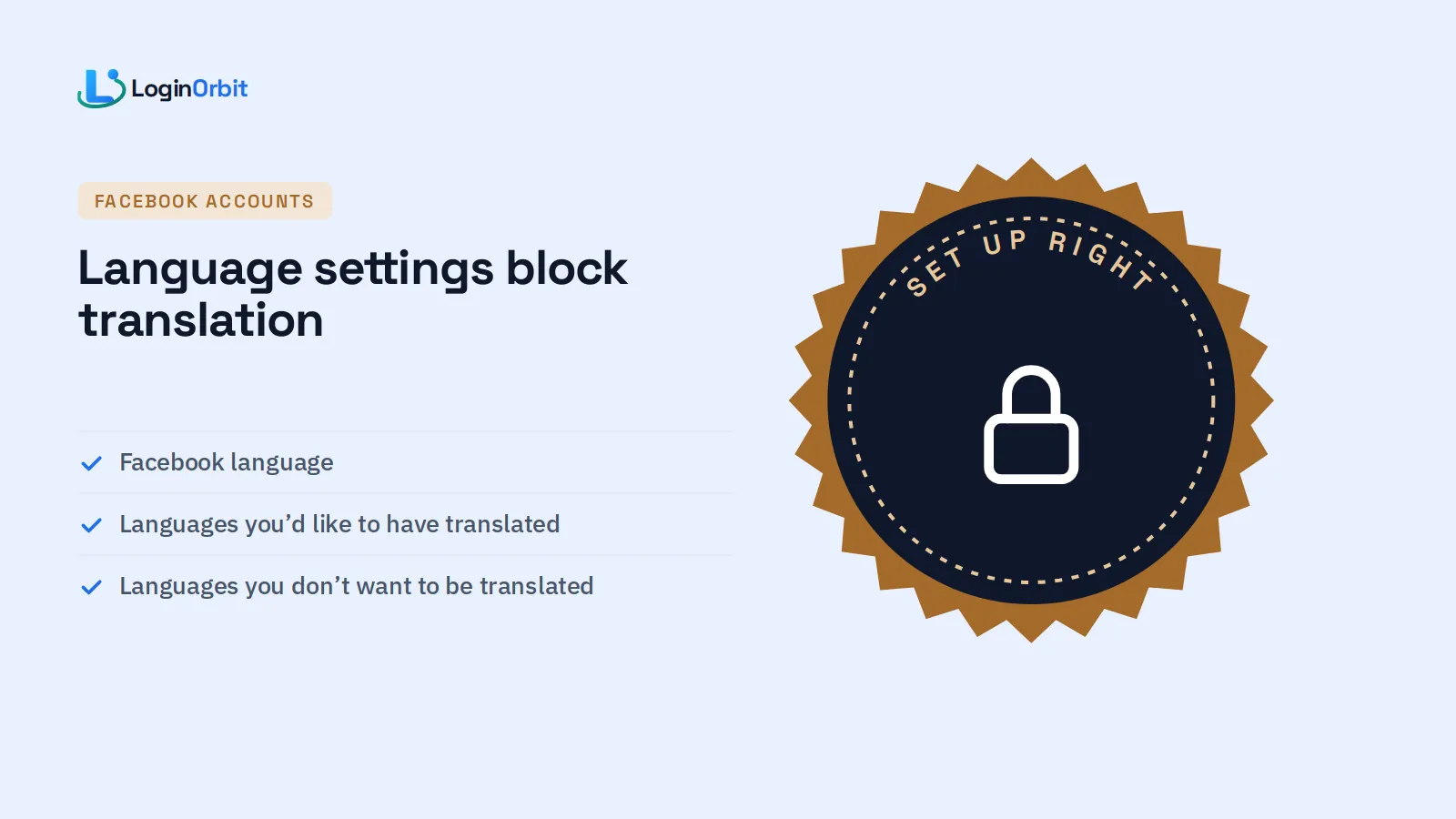
Facebook often hides the translation command when your language preferences already match the post language or when Facebook hasn’t been told which languages you understand. This can look like a broken feature, even though the post itself is available.
Open Facebook and select your profile picture or menu button. Go to Settings & privacy, then Settings, and look for Language and region. Facebook changes menu names from time to time, so use the settings search box if you don’t see that label.
Check these areas:
- Facebook language: choose the language you want for buttons and menus.
- Languages you’d like to have translated: include languages you don’t understand.
- Languages you don’t want to be translated: remove a language if it has been added by mistake.
- Languages you don’t want to be offered translation for: check that the post’s language isn’t listed.
Save each change before testing again. Close and reopen the Facebook app, then find a public post written in another language. Select the three-dot menu beside the post and look for See translation or Translate post.
For Facebook’s own explanation of these options, use the Facebook translation settings. The exact labels can differ between the app, mobile browser, and desktop site.
A useful check is to compare two posts from different pages. If translation appears on one but not the other, your account settings probably aren’t the main issue. If it appears on neither, settings or an account-level limitation is more likely.
The common mistake is changing Facebook’s main display language and expecting every post to translate. That setting changes menus, but it doesn’t always add the source language to your translation preferences. The result is wasted time and no change to the See translation option.
This fix usually takes only a few minutes and costs nothing. If the language menu is missing completely, use Facebook in a desktop browser and check the same settings there. If the browser shows the options but the app doesn’t, the app is the weaker link.
The post has no detected language
Facebook can’t offer a translation when it can’t confidently identify the post’s language. Short captions, slang, mixed languages, names, emojis, and text inside an image can all leave Facebook without enough plain text to classify.
The quickest way to separate this cause from a settings problem is to test three different posts. Choose a longer public post written clearly in Spanish, French, German, or another language you don’t use. If translation appears there, your original post probably wasn’t recognized as a translatable language.
Posts with only one or two words are poor tests. So are screenshots, memes, videos with spoken language, and captions that mix English with another language. Facebook may not translate words that appear only inside a photo because they aren’t normal post text.
Try the same check on a comment under the post. If the post has See translation but a comment doesn’t, the comment may be too short or unclear. If neither has the option, return to the language settings before assuming the account is broken.
Use a post with several complete sentences for the test, and check more than one writer if possible. A single post can contain unusual spelling or phrasing that confuses detection, so one failed example doesn’t establish a platform-wide problem. Keep the test in the same Facebook app or browser where you noticed the issue.
There’s no user setting that forces Facebook to detect every language correctly. You can ask the person to add the text as a normal caption, but you can’t make Facebook translate an image or unclear phrase from your side.
If translation works for longer posts but not short ones, leave the feature alone. It’s working within its limits. If it fails for clear, long posts in several languages, the next likely cause is an app or service problem. At that point, repeat the test after updating or reopening Facebook, then compare the result on another device or browser. If the option is missing everywhere, report the failed examples rather than changing random language settings.
App version or temporary glitch
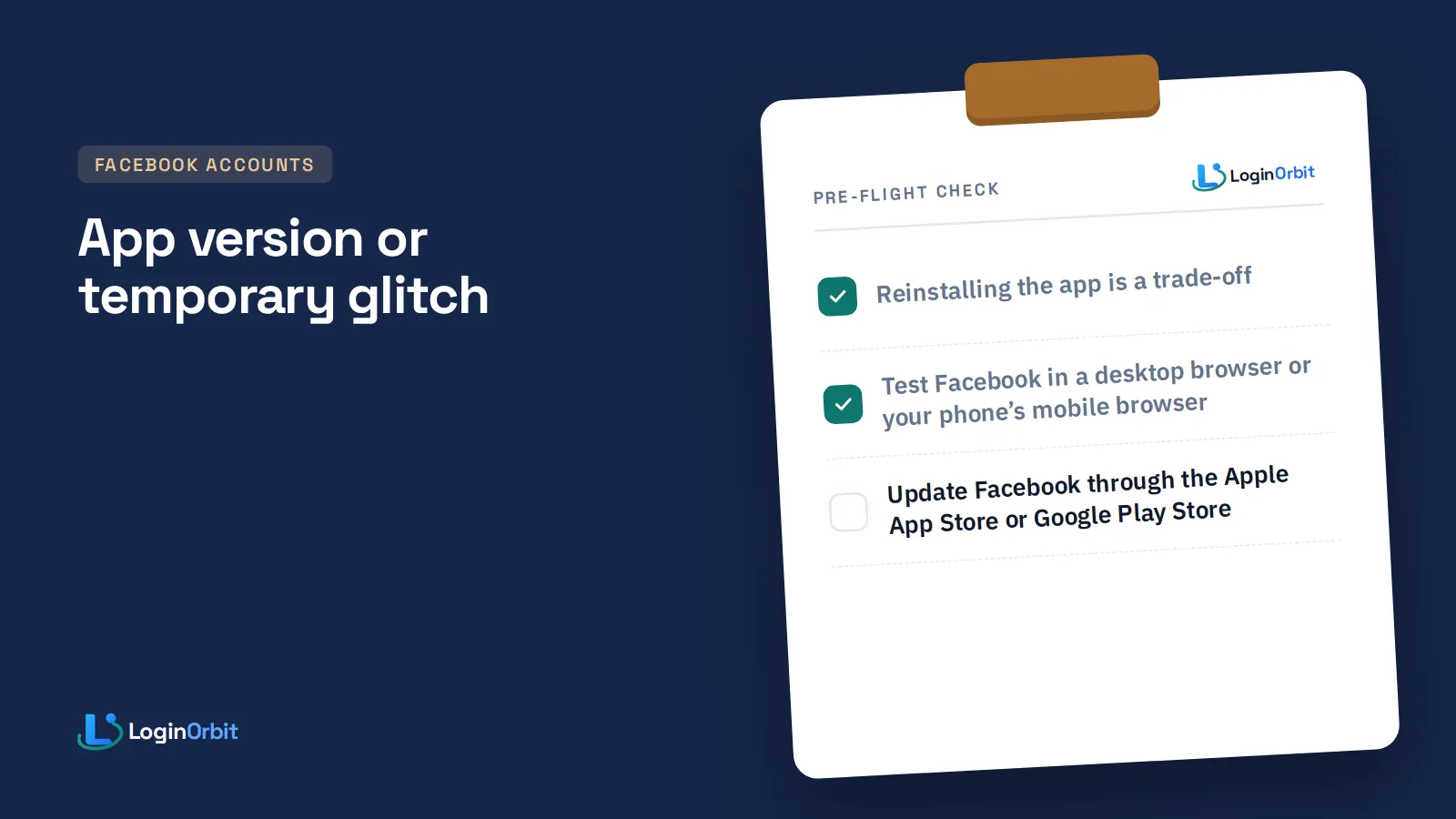
An outdated app, damaged local data, or a temporary Facebook error can remove the translation command even when the settings are correct. This cause is different from language detection: it affects several clear posts, and the same account may work in another browser.
Test Facebook in a desktop browser or your phone’s mobile browser. Sign in normally, open a clear foreign-language post, and look below the post text for See translation. If See translation appears in the browser but not in the app, the app needs attention.
Update Facebook through the Apple App Store or Google Play Store. Then close the app fully and open it again. On Android, you can also clear Facebook’s cache through the phone’s app settings; don’t select an option that removes stored account data unless you’re ready to sign in again.
On iPhone, there isn’t a separate system button for clearing one app’s cache. Updating the app, restarting the phone, or reinstalling Facebook are the safer choices. Before reinstalling, make sure you know your login method and can receive any security code.
If the browser and app both fail, test another clear post and another network. A Wi-Fi problem usually affects loading more broadly, so don’t reset your whole phone network just for one missing translation command.
Reinstalling the app is a trade-off. It can remove damaged local files, but it takes longer and may create a login problem if you don’t have access to your email, phone number, or authenticator. Try the browser first; if the browser works, reinstalling is reasonable. If both fail, wait and report the feature rather than repeating the install.
Facebook translation has limited availability
Some translation failures come from account, region, content, or service limits that you can’t change yourself. These causes are less common, but they matter when settings are correct and the feature fails across devices. If it works for one post but not another, suspect the post’s audience or language. If it fails everywhere, suspect an account or service problem.
- The author limits the audience: A private or restricted post may behave differently from a public post; test a public page post. If translation appears there, the original post’s visibility or content is probably the reason.
- The language isn’t supported well: A rare dialect or mixed-language caption may show no translation option; test a standard-language post. Text inside an image or video may not produce the same translation command as written post text.
- Facebook is changing the interface: The command may move or appear under a different menu; search the menu for “translate.” Check the post’s three-dot menu as well as any language or accessibility menu.
- A temporary account problem exists: If another account works on the same phone, use Facebook’s in-app reporting tools. Record the post type, device, app version, and whether the failure also occurs in a browser.
Don’t install unofficial translation extensions or give your Facebook password to a “support” service. If translation fails on the app, browser, and several clear public posts, stop changing account settings and report it to Meta. A deeper account or service issue needs Facebook’s support system, not a home repair. Include screenshots and the exact posts or languages affected so support can reproduce the problem.
What fixing Facebook translation requires
A settings fix needs only your Facebook login and a few minutes to compare the language preferences with a real foreign-language post. Check both Facebook’s app language and the language you want posts translated into. If translation is missing only for one language, test another foreign-language post before assuming the app is broken. It’s the lowest-cost option because you don’t need another app, subscription, or device.
An app fix needs a current internet connection and enough phone storage for an update. Update Facebook before reinstalling it, since an update may correct the problem without removing your session. Clearing Android cache is quick, while reinstalling is more disruptive because you’ll need to sign in again. On iPhone, updating or reinstalling is the practical equivalent. If translation disappeared immediately after an update, reinstalling may not help if the cause is a Facebook-side change.
A browser test needs no extra tool. Open Facebook in a browser and sign in to the same account. It’s valuable because it separates an app problem from an account or Facebook service problem. If the browser works, keep using it while you update the app. If both the browser and app fail, changing phone settings is less likely to solve an account-level or service problem.
There’s no part to replace and no safe reason to open your phone for this issue. If a repair shop offers to change hardware because Facebook’s translation menu is missing, that’s the wrong service. For account-level errors, use Facebook’s own report option and include the device, app version, language pair, and whether the browser also fails. A screenshot of the missing option can make the report clearer.
The final cost depends on whether the fix is a setting change, mobile data use, or paid technical support. You can get a real quote only after explaining that the problem is inside Facebook, not a damaged phone component. Avoid paying for support before the browser test identifies a problem that outside help can actually address.
Our team handles exactly this through Facebook Account Setup & Security Service.
Frequently asked questions
Can Facebook translate every post?
No, Facebook can’t translate every post. It may skip very short text, mixed-language captions, image text, unsupported language varieties, or posts where language detection isn’t confident. Test a longer public post written clearly in one language. If that post has See translation, your account is probably working and the original content is the limitation.
Why did Facebook translation disappear?
Facebook translation may disappear after a language setting change, app update, interface change, or temporary service error. Check whether the option is missing from every foreign-language post or only one. If the browser shows translation but the app doesn’t, update or reinstall the app. If both fail, report the problem through Facebook.
How long does Facebook translation take to come back?
A temporary Facebook problem may clear after several hours, but Facebook doesn’t promise a fixed repair time. Check again later using the same clear public post and a second device or browser. If the option is still missing after several checks, report it instead of repeatedly changing your language settings.
Is it safe to clear Facebook cache?
Yes, clearing Facebook’s cache is generally safe on Android because it removes temporary local files, not your Facebook account. The menu path depends on your phone maker. Don’t choose clear storage or clear data unless you know your login details, because that can sign you out and remove local app information.
What happens if Facebook translates the post badly?
A poor translation can change slang, names, tone, or meaning. Treat it as a quick guide, not a perfect version, especially for medical, legal, financial, or safety information. Compare the original text or ask a fluent speaker before acting. You can also report a translation problem when Facebook provides that option.
Does it matter whether I use the app or browser?
Yes, it can matter because the app and browser may show different menus and use different stored data. If translation works in the browser, your account is likely fine and the app is the problem. If it fails in both places on clear public posts, an account, language-support, or Facebook service issue is more likely.
What to do next
If the problem continues, check Facebook’s Help Center for a current outage or language-support notice, then report the issue through the app. Include your device, app version, and a screenshot if possible. Keep the app updated and try again later—translation features can return after Facebook fixes a temporary account or service problem.