You can open your Facebook activity log from your profile menu and review actions such as posts, likes, searches, and comments. On a computer, select your profile picture, choose Settings & privacy, then Activity log. In the Facebook app, open your profile, tap the three-dot button, and select Activity log.
The exact menu can change with your app version, device, and account layout. Filters also affect what you see, so check the date, activity type, and audience before you remove or hide anything.
Finding the Facebook activity log
The Facebook activity log helps people review actions connected to their account. You might use it to find an old comment, remove several likes, check past searches, or review posts where you’re tagged.
A phone user needs the Facebook app and an active login. The app’s buttons can look different on Android and iPhone, but the profile menu is the usual starting point.
A computer user can use Facebook in a web browser. This route often gives you more space for filters and longer activity lists, so it’s useful when you’re checking many entries.
Someone checking account privacy needs more than the log. The log shows actions, but it doesn’t replace Privacy Checkup, login history, or security settings.
This page suits people who can safely sign in and want to review their own account. If you’ve lost access, suspect someone else controls the account, or see a security warning, use Facebook’s account recovery and security tools instead.
What changes the results
The device matters most. On a computer, the path normally starts with your profile picture; in the app, it starts from your profile page. If you don’t see the same labels, update the app or use Facebook in a browser.
The activity category controls what appears. A search for posts won’t show every search, reaction, or login. Choose the closest category first, then adjust the date range if the item isn’t visible.
The date filter is easy to overlook. If you remember the month, select that period instead of scrolling through years. If you don’t know the date, leave the range broad and search by activity type.
Your account’s access level also matters. You can review actions connected to your account, but you can’t use your activity log to inspect another person’s private actions.
The mistake people get wrong most often is treating the first list as the complete record. A narrow category or date filter can hide the entry, so check both before deciding Facebook deleted it.
How to open the activity log
Use these steps for the Facebook app or website. The labels may move slightly after an update, but the profile menu and activity-log name should remain the useful clues.
-
Sign in to Facebook. Use the account whose actions you want to review. Confirm that your profile picture and name are correct before continuing.
-
Open your profile menu. On a computer, select your profile picture in the top-right area. In the app, tap your profile picture or open your profile page.
-
Open the settings menu. Choose Settings & privacy if Facebook shows that option. On some app versions, tap the three-dot button beside Edit profile instead.
-
Select Activity log. Tap or click Activity log when it appears. The page should show categories, dates, or a list of account actions.
-
Choose an activity category. Select posts, comments, likes and reactions, searches, tagged posts, or another relevant category. The list should change after the filter loads.
-
Set the date range. Choose a year, month, or custom period if Facebook offers it. If the result disappears, widen the range and check the category again.
-
Open the item’s options. Use the three-dot button beside the entry. Depending on the item, Facebook may offer Edit, Delete, Remove reaction, Hide from profile, or another action.
-
Confirm the change. Read the confirmation message before selecting the final button. The entry should disappear, change, or show a new status.
-
Check the result. Return to the filtered list and confirm the action changed. If it still appears, refresh the page and check the item’s audience or original post.
The important judgment is the difference between hiding an item from your profile and deleting it. If you need the content removed from Facebook, read the option carefully; hiding it may only change where people can find it.
If Facebook shows a security prompt, account lock, or recovery request, stop there. Don’t bypass it with third-party tools; use Facebook’s official account-security process.
Activity types and time needed
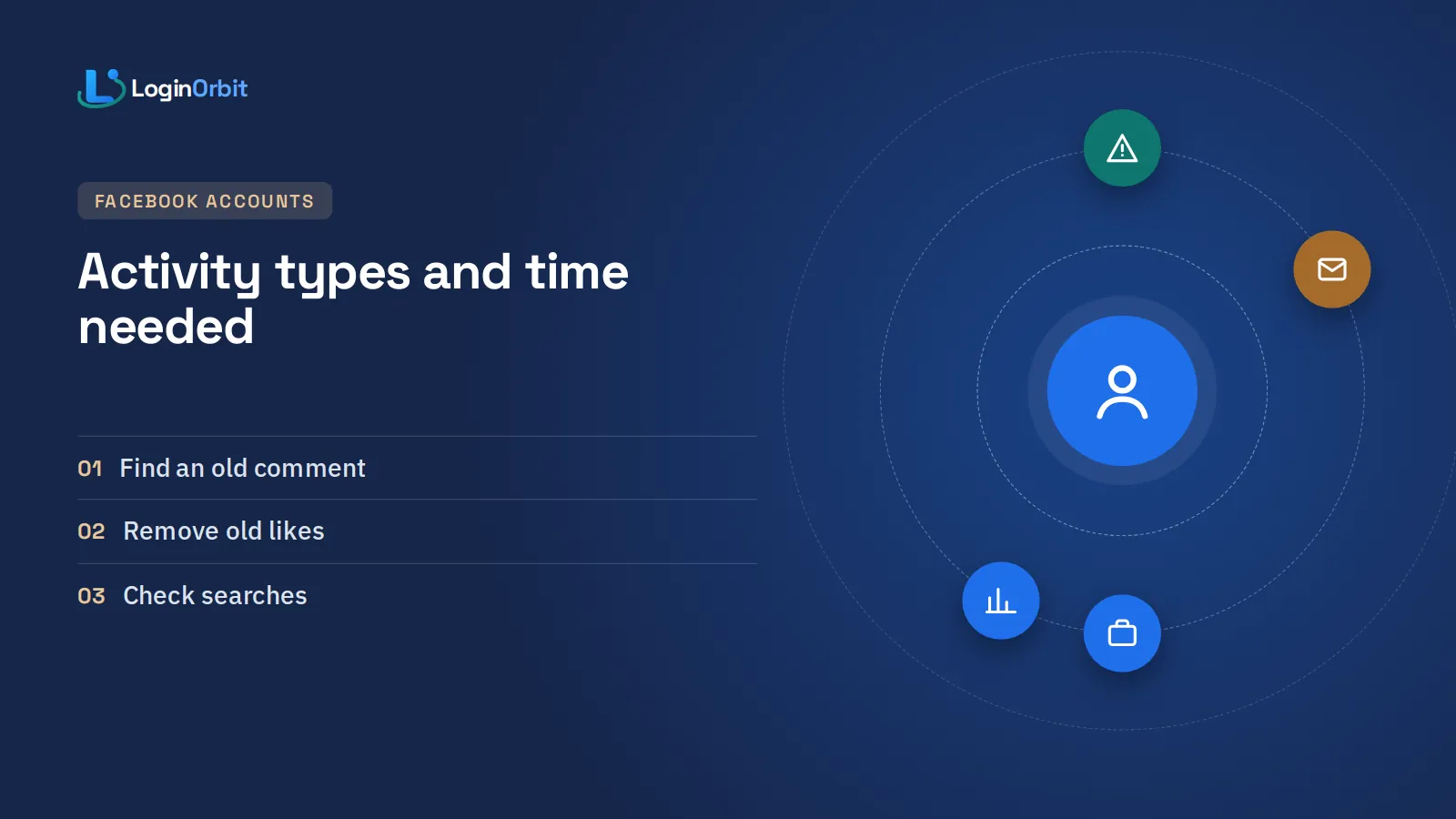
The best route depends on what you’re trying to find and how much of the account you need to review.
| Situation | What to do | What it takes | Watch for |
|---|---|---|---|
| Find an old comment | Filter comments | A few minutes | Original post |
| Remove old likes | Choose likes and reactions | Several minutes | Each action |
| Check searches | Open search history | Short review | Search dates |
| Review tagged posts | Choose tagged activity | Time varies | Tag removal |
| Check your posts | Filter posts | Longer for years | Audience settings |
| Review recent changes | Set recent dates | Short review | Narrow filters |
Details that protect the result
Prepare the search
Start with the activity type, not random scrolling. If you want a comment, choose comments first; if you want a reaction, choose likes and reactions. This reduces the list and makes a missing item easier to diagnose.
Use a broad date range when you aren’t sure of the date. Then narrow it after the correct category appears. If you start with both a narrow date and a narrow category, you may wrongly assume the action isn’t recorded.
Check before changing
Read the option beside each item before confirming it. Hide from profile, remove tag, delete, and remove reaction don’t necessarily produce the same result.
Experienced users also open the original post when the action affects another person’s content. If the post has been deleted, changed, or restricted, the activity entry may not offer every action.
Leave account-security settings alone if your goal is only to review activity. Changing passwords, login sessions, or two-factor authentication is a separate task and needs a careful check of your recovery details.
Facebook activity log problems
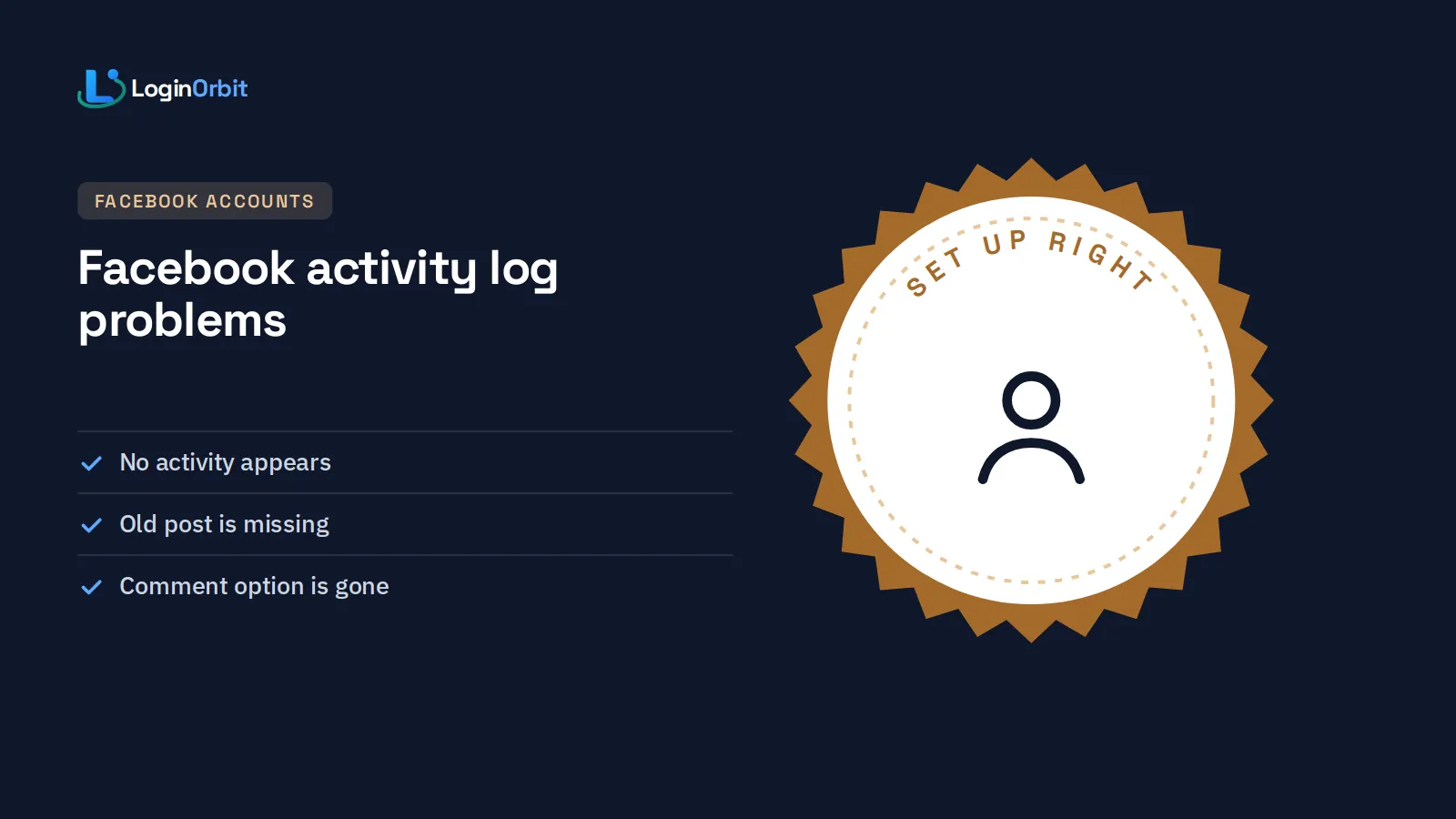
A missing item usually results from the wrong category, date range, account, or action type. Check those items before assuming Facebook has erased the record.
| What you notice | What it usually means | What to do first | How to stop it happening again |
|---|---|---|---|
| No activity appears | Filters are too narrow | Clear date filters | Start broad |
| Old post is missing | Post was deleted | Open posts category | Check original post |
| Comment option is gone | Original post changed | Visit the post | Save needed details |
| App lacks the menu | Layout has changed | Update or use browser | Note menu location |
| Item won’t delete | Access or post changed | Read the message | Open original content |
| Wrong actions appear | Wrong account signed in | Check profile name | Confirm before filtering |
Facebook rules and account access
Facebook controls which activity entries and actions appear. The available options can differ by content type, account status, device, and current Facebook design.
For Facebook’s own explanation of available activity controls, read the Facebook activity log help page. The page is the better place to check if a button named in your account doesn’t appear.
Regional privacy rights can also differ. Rules in the United States, European Union, and other regions may give people different access or deletion options, so check Facebook’s privacy settings and the data-protection authority for your location.
Don’t give your Facebook password to a person or tool claiming it can reveal hidden activity. If the account is locked, compromised, or under review, stop using normal troubleshooting and follow Facebook’s account-recovery instructions.
The real cost of checking
A single recent action usually takes only a short review. Older activity can take much longer because you’ll need to combine the right category, date range, and original post.
The biggest cost is attention, not money. Removing one reaction is simple, but reviewing years of posts or tags requires careful checking so you don’t change the wrong entry.
Time also rises when the original post is unavailable. If Facebook deleted it, the owner changed its audience, or you lost access to it, the activity log may show less information and offer fewer controls.
Don’t pay for a third-party activity viewer. Facebook’s own log is the correct first place to review account actions, and outside tools may create account or privacy risks.
For today’s exact menu and available controls, compare your app version with Facebook’s Help Center and the settings shown on your own account. Facebook can change the labels without changing the basic purpose.
Keeping the log under control
Review activity when you need to remove an old action, clean up your profile, or check a privacy concern. You don’t need to delete entries just because they appear in the log; the log is also a record of account actions.
After changing an item, return to the same category and confirm the new status. A removed reaction should no longer show that reaction, while a hidden post may still exist elsewhere on Facebook.
Keep your account secure by signing out of shared devices and checking active sessions in Facebook’s security settings. If you see an action you didn’t make, change your password and follow Facebook’s security prompts instead of repeatedly deleting entries.
The right follow-up depends on the sign you see. If the activity stops after you secure the account, keep monitoring; if unknown actions continue, use account recovery or Facebook support.
When the activity log isn’t enough
The activity log is for reviewing activity on your own Facebook account. It can’t reveal another person’s private searches, messages, or account actions. Facebook doesn’t provide a legitimate way to inspect those records, even if you know the person’s email address or have access to their device. Ask the person directly, or use the privacy controls attached to the specific post, profile, or message.
It’s also the wrong tool for a hacked, disabled, or locked account. Use Facebook’s account recovery and security tools instead, and follow the prompts from a device and location you normally use. If Facebook has restricted sign-in, repeated password attempts can prolong the problem or trigger additional security checks. Change your password only through Facebook’s official recovery flow, then review active sessions and remove devices you don’t recognize.
Use a privacy-request process when you need a formal copy of your data, a correction, or deletion under applicable law. The available rights and submission method depend on your country or region. Start with Facebook’s privacy page, keep a copy of your request, and contact your local regulator if Facebook doesn’t resolve it.
When you want it set up without the guesswork, Facebook Account Setup & Security Service is the place to start.
Frequently asked questions
Can I see everything I have done on Facebook?
No, not always. The activity log shows available actions connected to your account, but deleted content, changed posts, unavailable records, and narrow filters can affect what appears. Check the category and date range before deciding an action is missing.
Why can’t I find my old Facebook comment?
The comment may be under the wrong date or activity category, or the original post may no longer be available to you. Open Comments, clear the date filter, and check whether the original post still exists.
How long does Facebook keep activity log records?
Facebook doesn’t provide one universal retention period for every activity type. The available record depends on the action, account state, and current controls. Check the relevant category and Facebook’s own help information rather than relying on a fixed number.
Is it safe to use the Facebook activity log?
Yes, using Facebook’s built-in log is safer than giving your password to an outside service. Sign in through the official Facebook app or website, and stop if a page asks for unusual payment, remote access, or your password again.
What happens if I delete an item from the activity log?
The result depends on the item and the option you confirm. Deleting a post, removing a reaction, hiding a post, and removing a tag are different actions. Read the confirmation message before you finish.
Does it matter if I use the app or browser?
Yes, the menus and filters can differ. The app is convenient for quick checks, while a browser may make long lists easier to review. If one route lacks Activity log, try the other after confirming the account.
Can I recover a deleted activity log entry?
Sometimes, but not always. Recovery depends on the type of content and Facebook’s available recovery or trash controls. Open the relevant content category and read the available options; don’t assume every deleted action can be restored.
First Facebook activity log check
Start by signing in to the correct Facebook account. Open your profile menu and select Activity log. If Facebook asks you to verify your identity, complete that step; the log belongs to the account currently signed in.
Choose the category that matches the event, such as logins, posts, searches, or security actions. Set a date range wide enough to include the suspected activity. If nothing appears, broaden both filters before assuming the record was removed. Check unfamiliar devices, locations, and actions, then change your password. Save screenshots before making changes. Stop and seek Facebook account help if unknown activity continues or access becomes restricted.